-
How could BookTok improve how it does PR?
A few weeks ago, I posted a TikTok asking the BookTok community their thoughts on how PR was done through the use of influencers, advanced reader copies (ARCs) and PR boxes on the app. I received quite a few responses from people active in the community, and today I want to look at them and see if we could make any recommendations on what needs to change to improve BookTok PR, based on what people said.
@lamoralibrary Please feel free to share your thoughts, whatever they are! 😊 #booktok#ukbooktok#booktokpr#booktoker#ukbooktoker#bookish#publishingindustry#publicrelations#prstudent#lamoralibrary♬ original sound – rachel 🌙 (@lamoralibrary)
Many of the responses agreed they don’t have any inclination to trust reviews from BookToker’s where the book has been gifted – unfortunately, this is the main way bookish PR is done! While I don’t think much can be done to change this, I think possibly one change which could help such reviews be trusted more is for the reviewer or the publisher to emphasise that the review is honest, regardless of the gift status of the book. I feel a lot of distrust can come from rave 5 star reviews of books where one has been gifted to a reviewer, either on its own or in a PR box, even if the review is genuine on the influencer’s side, as people seem to perceive this as the influencer trying to keep the publisher happy.
I believe that publishers searching out influencers who are interested in the type of book that it is may also help, such as gifting fantasy book readers fantasy books, as opposed to a contemporary romance, as it already falls within the genre they like and have most likely built their audience around, ensuring there is an audience who will be interested in searching out the book once the reviewer has finished it (or even before, if they make a post of the unboxing of the book).
Other points highlighted in the response was that people don’t seem to believe having a huge following which gets you invited to special book-related events and sent lots of free/gifted items from publishers, necessarily inspires people to trust their reviews and want to look at the books they are showcasing. I think this could be rectified by my prior suggestion of ensuring the events they are invited to and the books they are sent match their reading tastes and audience interests, to ensure it appears authentic. The comments suggested most viewers have a select few BookToker’s who they trust implicitly due to having very similar, if not identical, taste in books, and I can also agree with that as someone who makes and consumes BookTok content. Therefore I think it seems important to make sure books and BookToker’s align.
I had also posed the question of whether smaller creators should be overlooked when deciding who receives popular and highly anticipated books in a series, using the Roots of Chaos series by Samantha Shannon as an example. The first book, The Priory of the Orange Tree, has become incredibly popular on BookTok since its debut, especially among BookTokers who favour sapphic fantasy books. The prequel, A Day of Fallen Night, is due to be published in early 2023 and ARCs were a hot topic when it was first announced Bloomsbury were to be sending them out.

Source: Amazon, Bloomsbury Publishing Unfortunately, Bloomsbury, as one of the largest publishing houses, can be quite select with who receives their ARCs and do not send them to those with less than 10,000 followers. This led to many BookTokers who are known to be very passionate about Priory expressing their disappointment at not having received a copy, even though many of them still had thousands of followers and a platform built upon recommending it and other books like it to their audience. Meanwhile, larger BookTokers who had never read Priory were receiving copies of the new book based solely on the size of their platform, while potentially not having an audience of fantasy readers who would be interested in the book.
In the responses I received, there was a general agreeance that smaller creators should not be overlooked, and that they are just as capable of advertising these books, maybe even more so if they are existing fans of the series. As someone who witnessed this myself, it was disheartening to see creators whose reviews I trust and who I know are passionate fans of the Roots of Chaos be turned down for ARCS due to ‘only’ having 5000 followers – which in the bookish community, is actually quite a lot! One response went even further and expressed they would not read the book on principle if the publishers were choosing to exclude creators from receiving advanced copies based on follower count.
I think this shows that while it is obviously important to ensure reviewers have a platform, its influence based on the apparent size of it can sometimes be underestimated by publishers. I do generally agree that even those with smaller platforms can achieve a lot, and that bookish PR practitioners should take notice of them, and allow them equal opportunities to larger creators.
While I am just a PR student who would like to one day tackle working in the PR side of publishing, and I am obviously not going to fix everything BookTok perceives as being wrong with it, it was very interesting to gather these responses! I think it proves that even PR professionals have something to learn from public opinion, and should I come to work in publishing I would be interested to try and carry over some of these ideas to improve the effectiveness of book advertising.
-
The PESO Model explained
If you had asked me before I started my PR degree what the PESO model is, I would have probably thought you had just mispronounced ‘pesto’.
Turns out the PESO model is pretty important, and covers the bases for the various media types you’ll encounter and work with while working in PR! So, if you’re not familiar with PR, what exactly is PESO?
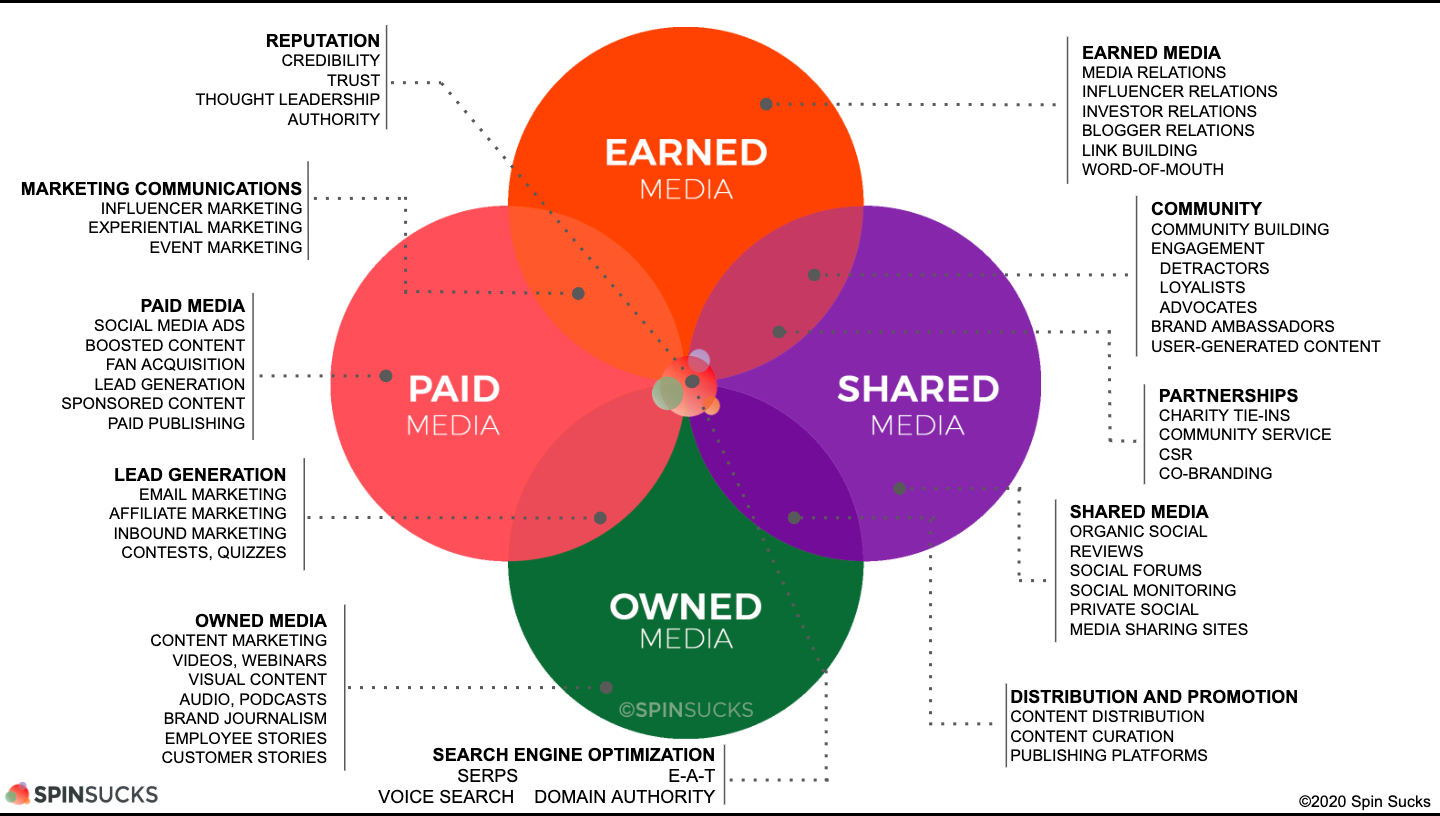
Source: SpinSucks PESO stands for Paid, Earned, Shared and Owned, the four types of media, and the model integrates them together to show what they cover, as well as where overlap occurs between two types.
The model was created by Gini Dietrich and reflects changes to PR, marketing and communications in recent decades with the rise of social media and modern communications technology, which mean practitioners have had to adapt their approaches.
Paid Media
Paid media was in the past primarily seen as purview of marketing, however PR practitioners make use of all the tools available. Paid media refers, especially in the online age, to advertising done on social media, including sponsored posts and paid online ads.
This can take many forms, but one many social media platforms support. Twitter, Instagram, TikTok and many other sites provide opportunity to pay for online advertising space for their users to see, and will often boost paid content further as part of their algorithm’s. This provides many opportunities for the post to be shared outside of existing audiences for the brand or company, and grow their reach.
Earned Media
Earned media is what has traditionally been considered PR’s media – it encompasses ‘natural’ growth through word of mouth, over the nature of paid media where it would be achieved through monetary means.
In the modern world, this involved relations with individuals who will do the sharing of ‘word of mouth’ messages for you, usually influencers and celebrities who will have sizeable audiences to promote to.
Within my own interest in PR, BookTok and book publishing often falls into earned media – often bookish influencers are sought out by publishing houses and provided with books for free in exchange for a review, helping to share and promote it. If it’s not and is paid media, as mentioned above, you can usually tell – they have to be visibly marked as AD or Sponsored!
Shared Media
Shared media can also be simply recognised as social media – the advent and rise in popularity of social platforms has completely changed the game for advertising, marketing and PR. It also encompasses shared ventures such as partnerships and networking.
Where shared media vastly differs from owned, is that once your ad, campaign or post is out there, you have very little control over what happens to it. All of the work needs to have been done beforehand to ensure it is well received and successful, or it could find itself on the wrong side of the internet receiving criticism, or becoming the latest meme.
Owned Media
And finally, as the opposite side of the coin to shared, owned media is, you guessed it, owned by you! For a brand or company, it is usually their own website.
While nowadays with social media being so prominent that most communication will be done via that, owned media benefits from allowing you to continue to control the post and message even after publication, which is why it can be favoured by businesses.
Hopefully this was a helpful rundown of the PESO model, and leaves you a little more clued up on the types of media and how they are used within PR!
-
League of Legends’ K/DA – my favourite gaming/music PR move
Within the gaming sphere, if you were to ask anyone for a game with a bad reputation, up until recently, one of the most frequent responses would have been League of Legends. Launched in 2009 by Riot Games, League is an online multiplayer battle arena game infamous for its toxic in-game chat, and the abuse new players could expect to receive from veterans for being “not good” at it. Paired with rampant racism and misogyny in the League community, many people, myself included, chose to avoid the game based on its poor reputation.
Things were not much better for its parent company, Riot. In 2018, a Kotaku article was published exposing an ingrained, systematic culture of misogyny and misconduct at the company, which led to an investigation and a lawsuit being filed by the State of California who ultimately sued them for $100 million for sexual harassment and violating gender-equality standards in the workplace.
In the midst of all this, with their professional reputation now tanking to match opinion of their most popular game, Riot were ready to debut their secret weapon.
Enter K/DA.
The hybrid real life/virtual girl group took their name from the gaming acronym for “Kills/Deaths/Assists”, a ratio used in gaming to measure player skill, and consisted of four of the most popular female League of Legends characters, voiced in the song by American pop singers Madison Beer and Jaira Burns, and 2 members of K-pop group (G)-IDLE, Miyeon and Soyeon.
The impact was instant. Madison Beer and the members of (G)-IDLE in particular already came with masses of their own fans eager to see what their new work, as well as curiosity over the concept of the group, with it being for a video game.
The song takes inspiration from both American and Korean pop music, the latter of which was still in its infancy of growing popular in the West, and at the time was likely used to entice League’s considerable East Asian fanbase. The flashy, colourful music video paired with 3D models of the characters performing choreography in brand new, stylish outfits was a hit, and soon K/DA were trending on Twitter and the video had gone viral. As of writing, it has gained over 536 million views on YouTube.

Screenshot of Akali from the music video. Source: Riot Games Riot had succeeded in taking some of their most popular characters and making them “real”, even going one step further with a performance at the League of Legends World Championships where the real-world singers were joined by the characters performing alongside them, through the use of CGI.

Source: VRScout The attractive and fashionable designs of the characters, a catchy song making the best use of popular talent and the music trends of the time, paired with the already known name of League in a perfect storm. Long time fans enjoyed this fresh depiction of the female cast, while they caught the eye of those who had never been interested in the game before, myself included.
Within a year, their debut song Pop/Stars had gone gold in the US, cementing the success of the group.
While I don’t believe it is fair to say K/DA were created solely to shift focus away from Riot’s controversy, they were definitely exactly what Riot needed at the time to shift focus from their company failings and gave the public something more positive to talk about when mentioning their name. Many, including myself, were even encouraged to try playing League in the midst of K/DA’s debut, and while that did not last long for myself, I know many who did still play to this day.
As a student, I consider K/DA one of the best uses of PR in gaming, as the vast success of the group shows that the concept and execution of the project worked perfectly, and helped in the short term to begin the process of mending Riot’s reputation, which is a success for any PR campaign.
As for K/DA, they are still somewhat active, with Riot fully aware of their potential and success they can achieve with good tactics. In fact, K/DA were only the beginning of League of Legends pairing with popular artists to produce music associated with the game, with Lil Nas X the most recent in this line up.
And, in good news for Riot, a commitment to change within the organisation and a good shake up on CSR has led to far improved female employment rates, and working conditions at the company.
-
Social Purpose and CSR in Public Relations
Reputation management is one of the key roles of PR – or depending on who you ask, the main role! The CIPR actually defines PR as such: “Public Relations is about reputation – the result of what you do, what you say and what others say about you.” As such, there are many ways reputation can be managed by PR professionals, including social purpose and corporate social responsibility (or CSR for short).
Depending on your familiarity with Public Relations as a discipline, you may have never heard of either of these – which is why I will break them down and explain them more here.
So, why is Social Purpose important?
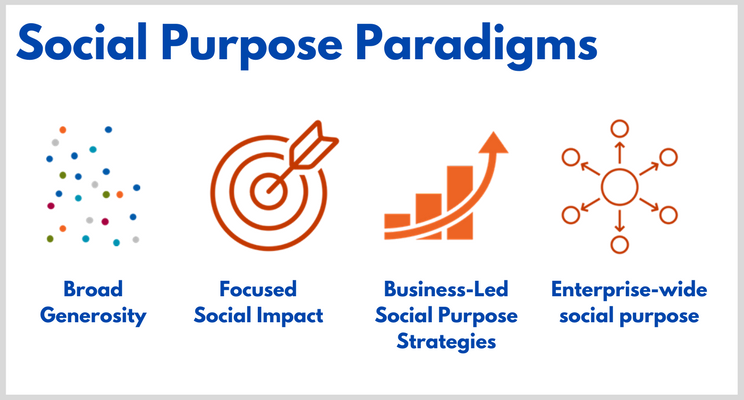
Source: FSG Outlining social purpose within an organisation is a good strategic PR move – it can help the company communicate who they are and their core values to the public. It helps internally by clarifying how the organisation would like to be perceived externally, and then steps can be taken to help achieve this.
Social purpose developed as a way for companies to publicly take accountability for their actions and recognise the impact they have on wider society, including on the environment. They can use this to raise awareness for a multitude of social issues, as well as demonstrating corporate responsibility beyond turning profit.
In the long run, reputation is a risky and tumultuous thing to build, and there is never a guarantee of succeeding in building a good one for yourself – but social purpose can certainly go a long way to ensuring there are strong foundations making the rest of the work more smooth.
(In fact, it’s actually legally required in the UK for a company to have a good reputation, or at least be committed to trying to have one! It is listed as a requirement in the Companies Act of 2006.)
And what about CSR?
Corporate social responsibility is about companies meeting societal expectations, but on a voluntary basis. Social purpose and CSR often end up linked, as they can help to fulfil the other.

Source: Business Continuity Institute Most companies outline their CSR somewhere public, such as their website, and it will usually detail the commitments they have made to certain social causes and how they aim to achieve this. These goals can be related to almost any important social initiative, but common ones are charitable donating, environment commitments, and diversity and inclusion.
For an example to help explain this further, lets look at one of the largest companies in the world – the Walt Disney Company. Their CSR commitments are easily accessible, and can be be found here.

Clearly labelled along the top, we can see all of the different causes they have commitments to, which include the ones I mentioned before, as well as workforce and operating rules among others.
But lets have a look at the first one listed – diversity and inclusion.


We can see here how Disney has clearly and simply laid out its goals for diversity within its content, as well as inclusion among the staff and workplace culture in the company. Notable as well, is the sections in italics which set out their intentions and provide a tangible way for both the company and the public to measure their success in achieving them, allowing them to either hold themselves accountable, or be held accountable by others, if they fall short.
CSR in particular is measurable in reports, and many companies produce one annually which will highlight successes and failures in its CSR.
Continuing with Disney as an example, their 2021 CSR report is accessible here.
While not a long report by any means, it summarises in an accessible manner the achievements of the company in the 2021 year towards its CSR objectives, and lays out its plans going forward. So, in keeping with looking at their diversity and inclusion, we can see they launched a new diversity initiative in 2021 called Reimagine Tomorrow, which introduced new diversity and inclusion standards for content and will improve recruitment from Black Colleges in the US. While too early for them to provide concrete results so far, they also set out intentions to send more than 50% of its charitable funds to programs for underrepresented communities.

Providing figure and statistics is important in these reports, as it gives the public something to measure. So now, you can keep an eye out for their 2022 report early next year and see how they’ve done!
I hope this can be helpful, especially to any unfamiliar with the responsibilities of those in PR, and can provide more insight into just how complex reputation management can be! Certainly before I was a PR student, I never even knew what social responsibility or CSR were, and much less considered it a PR role. Now, next time you’re shopping at your favourite store, eating at a chain restaurant or watching your favourite Disney movie, you’re all clued up on the inner workings of corporate responsibility.
-
“LOONA karma” – How Not to Kick a Member from your Kpop Group
On the 25th November, Orbits, the fans of Korean girl group LOONA (Girl of the Month/이달의 소녀 in their native tongue) received news which to many, was not entirely a shock, but the way it was delivered certainly was. The backfire which has ensued since is a lesson and warning alike to Kpop entertainment companies to step up their PR game, or not play it at all.
Blockberry Creative (abbreviated as BBC) announced that member Kim Jiwoo, stage name Chuu, was to be removed from the 12-piece with immediate effect, citing abuse of power against staff as their reasoning.
(Some Tweets included in this post are translations of posts originally written in Korean and have been translated into English by fan translators.)
To any and all familiar with Chuu, this came as not merely a shock – it was downright unbelievable. Chuu, undeniably the most popular and well-known member of LOONA, reached her fame through a bubbly, kind and cute personality which captured the hearts of many beyond her fanbase. Reports from behind the scenes had always verified her behaviour as authentic and not a fabrication for the cameras, which further endeared her to people. So how on earth could BBC be expelling their most popular member under the guise of verbally abusing staff?
Known to fans, Chuu had been embroiled in conflict with her company for many months, having spoken publicly about the mistreatment she and other members received under them, including receiving no payment in the nearly 6 years she was signed with them. She was having to make her own way to and from schedules with no help or management from BBC, and was excluded from LOONA’s recent world tour and Japanese single release.
So, with all said and done, it appears Blockberry Creative made the decision to finally cut ties with their artist who was clearly unhappy under the label, and was bringing negative attention to them for speaking out about it. However, the mention of Jiwoo verbally abusing staff, especially with no evidence being presented, created quite the backlash.
Having been a Kpop fan for many years, I have seen many statements from various companies when artists have been removed from groups, but this statement is quite unique in its unprofessionalism. As a PR student, I can also use my knowledge to identify failings in the way this was handled, and the response it received soon after.
Within a few hours of the statement being posted, Blockberry Creative had received quite the opposite of the support they had no doubt hoped for.
A writer on Chuu’s YouTube show was the first to speak out in her defence. LOONA member Kim Hyunjin expressed her anger and upset at the news on her personal FAB account, where the artists communicate in a chatroom-style with fans. The Twitter trends page in South Korea 2 hours after news of Chuu’s expelling was publicised. When news of an idol’s misbehaviour is exposed within the Kpop industry, historically it leads to them being condemned by fans and professionals alike, with more stories of wrongdoing coming to light. Not so with Jiwoo. The vast amount of support Chuu received in the hours and days after news of her removal was overwhelming, with her own former staff and even those who only worked with her for even a couple of hours at events all feeling obliged to speak up against the purported lies the company was spreading, claiming they couldn’t believe she would ever speak badly against someone. Even a fellow LOONA member, Hyunjin, spoke of her upset and anger, leading many to believe the group were not told until the public also found out, but also disproving something mentioned in Blockberry’s own statement – that the remaining members were against their former colleague and disagreed with her actions in speaking out. Many in South Korea and beyond have made their thoughts known regarding the situation, often expressing disbelief and outrage towards the company, and the story has begun to be picked up by national media and industry professionals in Korea.
Input from an industry veteran, commenting on the unprofessionalism of Blockberry’s statement Another industry insider gave their thoughts on the situation. It is interesting, in my opinion, to see even non-PR people recognising the failings of the statement and insult it brings to both Chuu and BBC’s names through the company’s unprofessionalism.
The latter half of the statement in particular, from a PR perspective, feels incredibly self-serving and as though the company are comforting themselves. “We and the LOONA members will act gratefully with all respect towards all our staff and not forget our sense of gratitude,” feels a little ironic, given the reports Chuu had in fact not received any support from staff for a number of months.
The lack of professionalism is also apparent in the way the statement appears to backhandedly refer to Jiwoo in the latter half, shading her for her alleged bad attitude and trying to imply the other members and the company itself are above it, “the Company and LOONA will return to a humble mindset and do our best so that nothing like this may happen again,” and “the LOONA members have never worked solely for their personal profit or gain.” The latter statement especially leaves a bad impression as all of the members have spoken out about not receiving payment for their work over the past few years, and as a PR student I think this was a terrible choice of phrasing for that reason, as it appears BBC are excusing themselves from having to pay their artists by implying the members are content to simply perform for fans and make them happy.
On the 28th November, in an unprecedented response to the backlash they were receiving following the announcement, Blockberry Creative released a follow-up statement:
This statement is purely bad PR, and also highlights the ways in which the first statement failed. If I have learned only one thing about PR during my Masters so far, it is of the importance of communication, and Blockberry having to release a second statement to clarify (or as some believe, excuse) the message of the first, is a clear indication that they did a poor job of it. Despite this however, it also does a poor job of backing up their claims against Chuu, as they openly state that they will not be presenting evidence of her abuse and instead expect her to refute it with her own evidence. This has not really helped their position within the public eye, and has in fact cemented many people’s opinions that the allegations are groundless, and that they have no evidence at all of her abusing staff. From a PR perspective, I do believe if you are making allegations against someone, especially such serious ones, proof should be presented when asked for to maintain credibility and transparency, and as such I am inclined to believe Chuu is innocent of what they have accused her.
In general, I find the statement as a whole to be lacking and extremely unprofessional. As a student, I consider this to be a masterclass in how to not handle the expulsion of a group member, from the initial statement filled with so many holes it could be a sieve, to a follow up statement which proves and resolves absolutely nothing.
In a hopefully happier resolution to this scenario, and embarrassingly poking more holes in Blockberry’s credibility, 9 of the 11 remaining LOONA members have filed to end their contracts the company, citing “breach of mutual trust” as the reasoning (the remaining 2 are also expected to file in the future, but extenuating circumstances likely prevent it for now):
Of course, Blockberry Creative has had only one thing to say about the report: “It’s groundless.”
Rachel Williams
-
Rooting for the anti-hero? – Taylor Swift’s PR Crisis
Taylor Swift should be celebrating right now – and surely she is, following the successful and record-breaking release of her new album Midnights and its extended (3am Edition). This release caps off a huge year for her, full of music releases, a Hollywood acting gig, and accolades and awards for her recent work. When she announced her hotly anticipated world tour, titled The Eras, her first since 2018, her fandom, affectionately referred to as ‘Swifties’, went into meltdown.
With millions of new fans joining the ranks of the Swifties over the course of the pandemic, demand for this tour would be like nothing they had seen before, and many were willing to do whatever it took to ensure they would get a ticket. Pre-sale codes were bought through orders of Midnights directly from Taylor’s store, or through owning a Capital One credit card. As the date of the pre-sale grew nearer, anxiety and excitement mixed as millions of fans prepared to fight for their tickets, but overwhelmingly there was a sense of community and joy as Swifties were excited to join their favourite artist, and fellow fans, at her shows. So, how did it all come to this?


No limit on pre-sale codes had been implemented and 14 million people attempted to join the queue on the morning of the pre-sale, which was only meant for 1.5 million. The “unprecendented demand” put stress on Ticketmaster’s systems meaning fans spent up to 7 hours waiting in the unmoving queue, often to either be kicked to the back of the line by system errors, find their codes did not work upon reaching the front, or that once they got in, the tickets they wanted had been sold, and were now up for resale for massively inflated prices.
It didn’t get any better in the aftermath either.


With general sale cancelled, millions of fans left upset and frustrated, and even an investigation into Ticketmaster’s practises being officially opened due to the fiasco, the glaring absence of one key figure became all the more apparent – where was Taylor Swift?
Finally, on the 18th November, after 3 days of radio silence, Taylor quietly posted this statement on her Instagram Story:

Reaction to this has been mixed, coming from both fans and PR professionals. As a Taylor Swift fan myself, as well as a PR student, I have my own complicated thoughts on the matter.
To begin with, the decision to post the statement through such a casual and impermanent channel, given Instagram Stories only last for 24 hours before being archived, is a strange one. It has not been posted on her Twitter account, her website, or even as a main post on her Instagram account, severely limiting its initial reach and meaning many fans first saw it as a screenshot on another social media platform. From the outset, this creates a disconnect with the sincerity of the message, as it almost feels like it was trying to be hidden from the start.
Having recently covered media handling, and crisis management in class, I couldn’t help but consider how it is recommended PR’s handle crises in contrast to this statement, given that what has transpired is most definitely a crisis requiring a response. In my opinion as a PR student, the statement itself falls very short.
It was emphasised that the most important thing to do, when necessary, is to apologise, which is glaringly omitted from Taylor’s statement. The opening of “Well.” sets an cold and bitter tone, and the statement which follows deflects the blame entirely onto Ticketmaster and Live Nation, without naming either “outside entity” directly. Taylor explains how a love for her fans and their experience means she has rarely trusted third parties with responsibilities all throughout her career, in fear of them messing up, and now the worst has come to pass and her fans are suffering for it.
The whole statement feels sanitised and ineffectual – she is “extremely protective” of her fans and is “pissed off” they had bad experiences, yet does not offer an apology. One could argue an apology is not due, as Taylor is not directly responsible, and while that is right, fans had up until this point been offered very little in the way of apologies or admissions of wrongdoing, and that even a small “sorry” from Taylor herself could have helped to soothe a lot of the hurt.
In addition, Taylor and her team attempting to shift all of the blame to Ticketmaster/Live Nation feels like an attempt at avoiding responsibility, while also not providing a suitable explanation for upset fans. In the statement she outright states she will “not… make excuses for anyone”, devoiding herself of responsibility. However, because of this, fans continue to be left in the dark around what went wrong, and how. Taylor framing herself as an innocent bystander who had to “just watch mistakes happen” instead of acknowledging the prestige and power which comes with her name, and how she has worked exclusively with Ticketmaster in the past to the sound of great financial success for both entities, is I believe an attempt by her team to sway public opinion in her favour, evoking the “girl next door” image she was so famous for at the beginning of her career. The statement is also deliberately vague with the steps that are being taken by Swift and her team to try and resolve the issue – by her own admission, nothing has been sorted yet, which is not a comforting message to provide to upset fans.
Swift closes out her statement by focusing on the positives – 2.4 million tickets are already sold! But this feels hollow within the context of the statement, as most who will be reading this likely missed out on getting their own. While successes are important to mention in media statements, when dealing with a crisis statement, I feel it is tonally inappropriate and not a decision I would have chosen were I part of Taylor’s PR team.
The final paragraph mentioning directly those who did not get tickets feels like an afterthought, especially given their mention after those who were successful. The use of “all I can say” again evokes the image of Swift being powerless, when she could absolutely use her status to fight against Ticketmaster, as many other artists have done before her for the benefit of their fans.
As I previously mentioned, responses to this statement have been mixed.


These comments highlight that the failures of the statement are being noticed by PR professionals and the general public, in particular the lack of clarity around any decisive action being taken to resolve the issues. Especially as concerns rise around how many tickets are up for resale, Taylor’s celebration of 2.4 million tickets being sold unfortunately appears quite hollow in the face of many of them not having been obtained by fans, but instead scalpers.
However, is all lost for Taylor in the midst of this crisis? I would say not.

Many fans appreciate her speaking up at all, and eagerly await to see what her response will be, undeterred by the initial vague response.
As a PR student and also a Taylor fan, I find my own opinion on the statement to also be mixed. Since starting my PR course I have learned a lot in just a few months, and I think prior to that I would have also been happy with this statement and how it is presented, content to know Taylor was taking steps to rectify the situation. However, with just a few months of study under my belt, my opinion is able to be a lot more formed and I can identify the failures present, and consider for myself how I would have done things differently.
At the end of the day, this is far from the first PR crisis Taylor has faced, and will undoubtedly not be the last. As a PR student and fan I can appreciate the way in which she carefully crafts her public image and uses PR to preserve it to the best of her ability, which I respect and I think she and her team do a wonderful job. I do look forward to seeing how this all progresses from Taylor’s side, as well as any repercussions which may finally face Ticketmaster and begin to dismantle their monopoly on the ticket sales market.
But lastly, how do you feel this was handled? Feel free to leave any thoughts and opinions below, as I have really enjoyed learning others’ opinions on all of this.
Rachel Williams
-
Subscribe
Subscribed
Have a WordPress.com account? Log in now.

